Melnik - The wine capital of Bulgaria
The smallest town in Bulgaria (211 inhabitants), Melnik, is nestled between the southern slopes of Pirin, among strangely shaped sand pyramids. The town is located in the Municipality (county) of Sandanski, Blagoevgrad region, 175 km south of Sofia and only 30 km from the Greek border.
We stopped here for one night, in a sweet early September 2021 on our way back from Greece, where we had spent a week on the shores of the Ionian Sea.
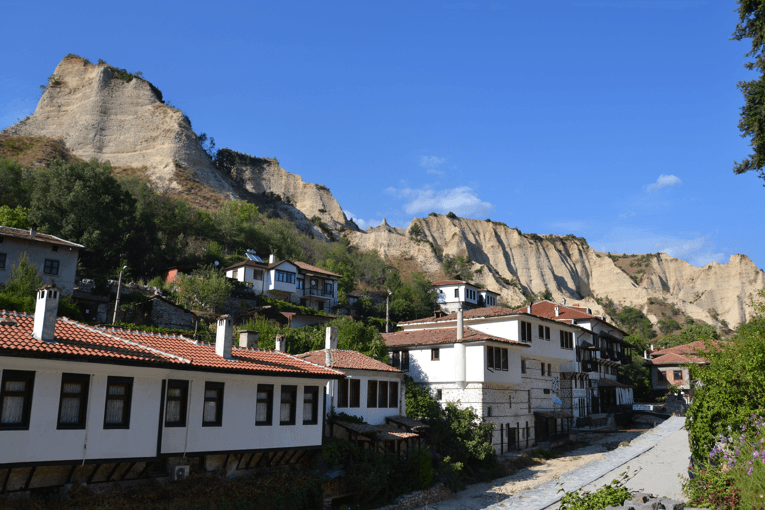
Melnik is a fascinating town, famous for its sand pyramids. These are limestone formations that surround the town's traditional 18th-19th century houses, houses with an architecture with Ottoman influences, 96 of the buildings being declared historical monuments.
The first Thracians who settled in the places where the town is located today were part of the Medi tribe, from which Spartacus apparently also came.
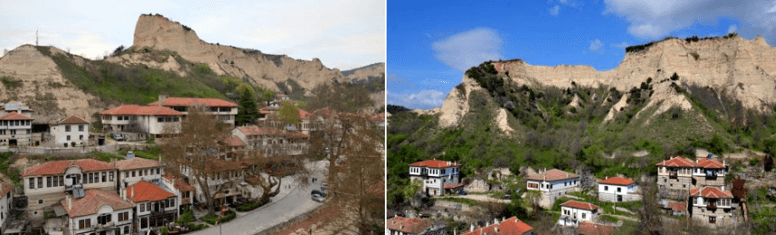
In the Melnik region, winemaking is a centuries-old tradition. So it is no wonder that there are dozens of vineyards in the area, each with its own unique look and style. Why is that? Due to the dry, sandy soil, grapevines are one of the few crops that can be successfully cultivated in this area.
The warm climate and hot summers (we are talking about the hottest region in Bulgaria) provide optimal conditions for growing quality grapes. So, after the bunches spend hundreds of hours in the scorching summer sun, the pickers are happy to collect the ripe grapes – they form the basis of a richly aromatic, tasty, aromatic – even emotional wine. That is what Melnik wine is all about.
We, as passionate hikers and eager to meet Melnik wine, after checking in at HOLIDAY IN MELNIK-Guest House, set out to discover the city...
Melnik looks like a painting, so peaceful, as if time had stood still, although until the 18th century it had over 1300 houses.
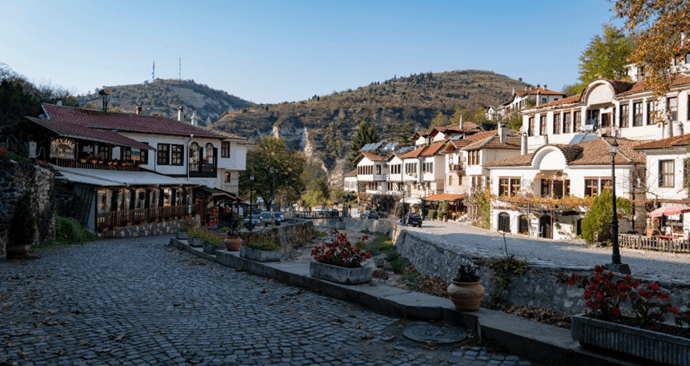
For those interested in wine, Melnik is an ideal place to visit. The town is located in an important wine-growing region and is known for its quality red wines. There are many wineries in Melnik that offer tours and wine tastings, where visitors can discover the history of local wines and taste some of the best wines in the region.
In such a wine paradise, we chose to first visit the Kordopulova House, about which we had only read good things.
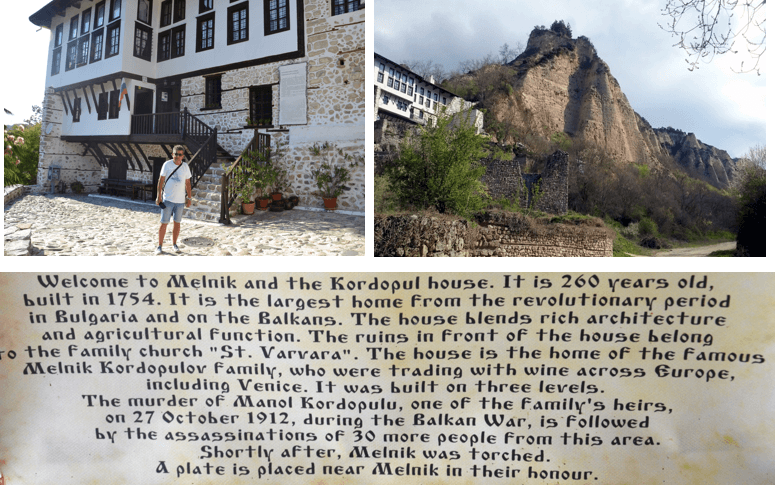
The Kordopulova House, now a museum visited by 30,000 tourists per year, showed us how famous the town is for its aromatic wines, with cellar galleries where Bacchic treasures are kept, celebrated through the Golden Grape Festival, organized in January of each year.
The Kordopulova House, the largest medieval house from the revolutionary period in Bulgaria and the Balkans, was built by the Kordopouloses family, who dealt in wine trade in the Balkans, but also in Venice, and history designates the national hero Sandanski as having been sheltered here during the Balkan War, so as not to be spotted by the Turks.
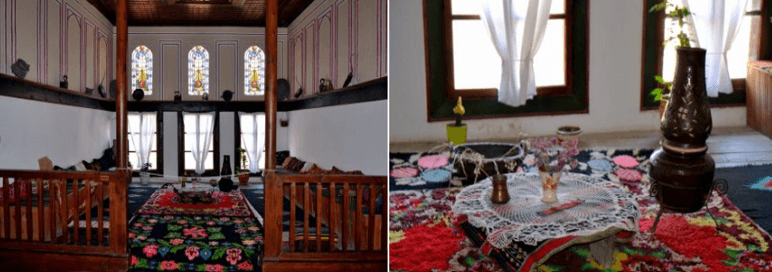
The furnishings of the house are very beautiful, especially the room, which opens on all sides, with windows in all four cardinal points. The guide will give you a lot of information about the customs of the time and point out all the details of the furniture (including a cupboard that functioned as a hiding place during negotiations for the sale of wines, which at that time were exported as far away as Venice).
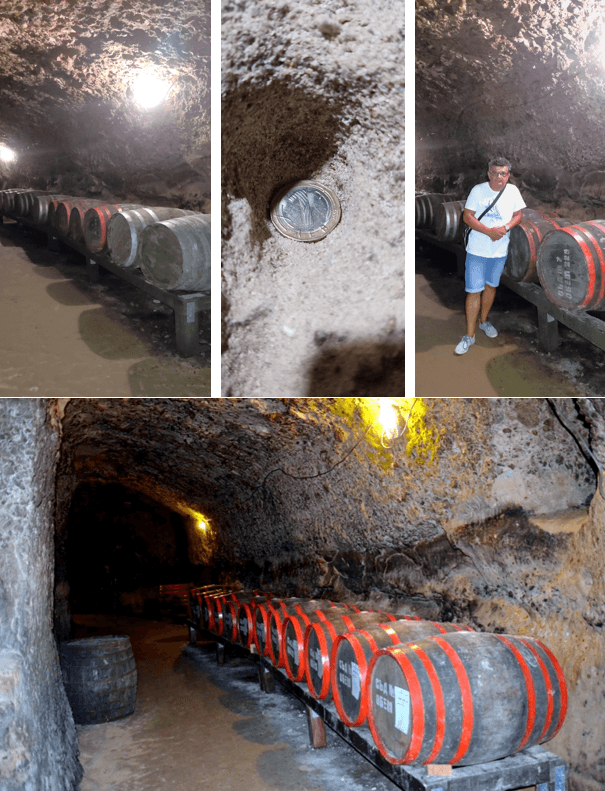
To visit the Kordopulova House, the ticket costs 5 leva (about 13 lei), and what you will see in the house built in 1754 by the Kordopouloses family is something special. We liked the most the cellar of the house, which is 200 meters long and is dug into the rock, able to house 40,000 liters of wine. As a peculiarity, on the walls of the cellar tunnels are caught coins from tourists, the explanation being that they bring them luck.
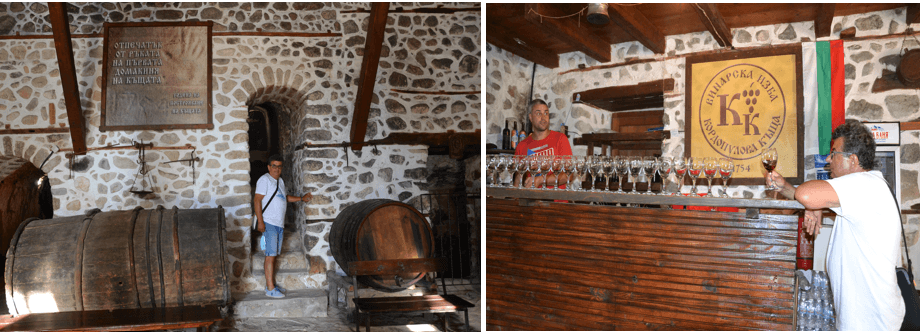
At the end of the visit, we were invited to taste and buy local wines. Kordopulova House is a “must-see” if you arrive in Melnik.
The town also has a lot of souvenir shops, and you can find Melnik wines, bottled or not, on almost every street corner.
After walking through the picturesque streets of the town, our visit continued with a stop at another important landmark of the town: the WINE MUSEUM.
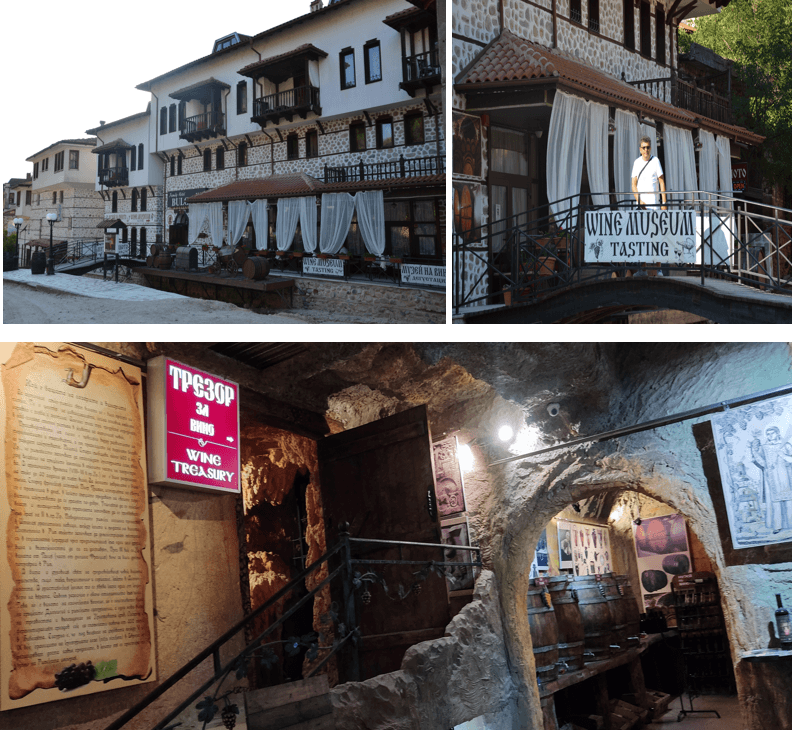
The entrance fee to the museum is 3 leva / about 1.5 euros. You can also buy a slightly more expensive ticket, but with wine tasting included. This fee will also allow you to try 3 types of red wine and one type of white wine, accompanied by slices of toast, drizzled with olive oil. The wine is poured into glasses directly from oak barrels.
The cave-vault of the museum stores over 400 types of wine, produced in the country and abroad, so the choice of each visitor to buy wine is not only about the tasting portions. In addition, in the museum, you can also buy a homemade cognac. Or you can seal your own bottle of wine with your photo instead of a label. This will cost you decently – on average 10-12 leva, about 5-6 euros. The bottle is filled with pre-selected wine – white or red.
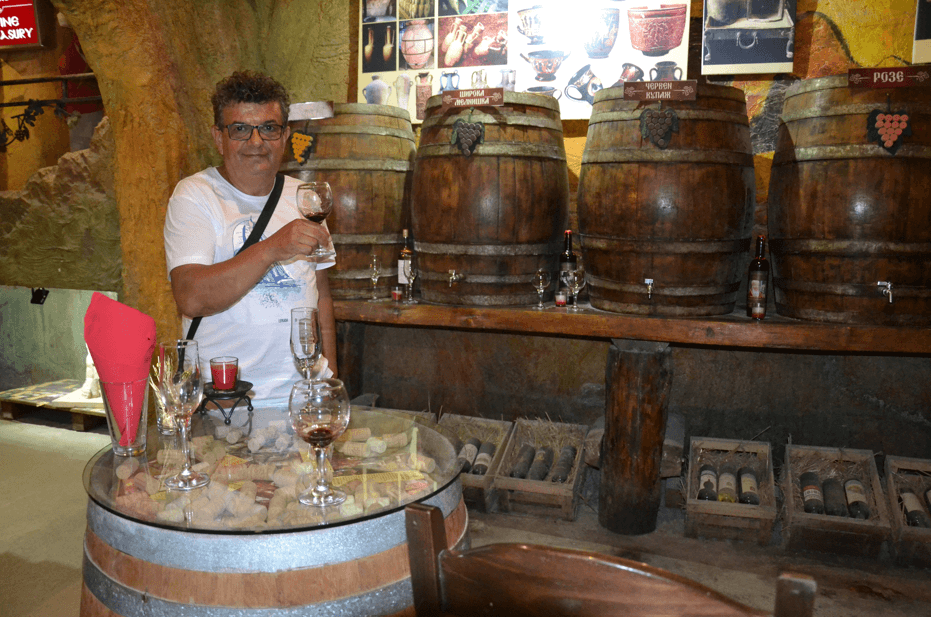
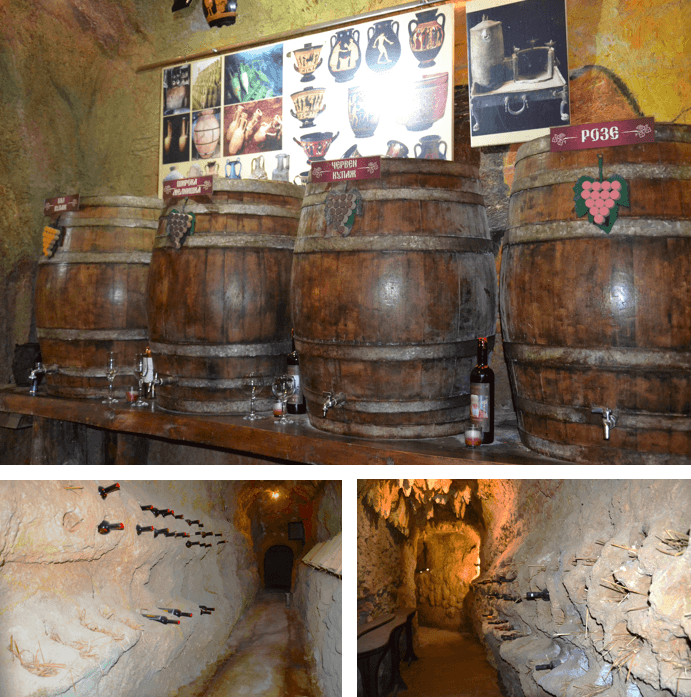
The wine tasting was interesting and informative. I tasted 3 very successful Bulgarian red wine varieties, about which I must give you some mandatory information…
Shiroka Melnishka, (Bulgarian: Широка мелнишка лоза / Šhiroka Melnišhka loza), often called Melnik broadleaf, is a red wine grape variety. It is mainly planted near the border with Greece. In Bulgarian, the name of the grape means “Melnik broadleaf vine”. As a variety, Shiroka Melnishka has an affinity for oak, which can produce pronounced tobacco notes. The wines are often compared to Châteauneuf-du-Pape with its similar profile of spice and strength. The wine is said to contain the longevity enzyme and its fame dates back to the time of the Roman Emperor Trajan.
It then became one of Winston Churchill's favorite pleasures, who ordered 500 liters of the Bacchic liqueur annually.
Ruen is a wine variety that emerged from an almost extinct cross between Melnik (the broad-leaved Melnik vine) and Cabernet Sauvignon created in Pleven, Bulgaria in 1951 and officially launched in 1964. Like the Rubin grape variety, Ruen is grown only in the Struma River Valley in southwestern Bulgaria.
Melnik 55 is a wine variety that is characterized by its ruby color, with light granite hues. The aroma of this wine has fruity notes with a very delicate vanilla finish. Its taste is mild, with an elegant scent of cherries and blueberries. The aftertaste is long and discreet.
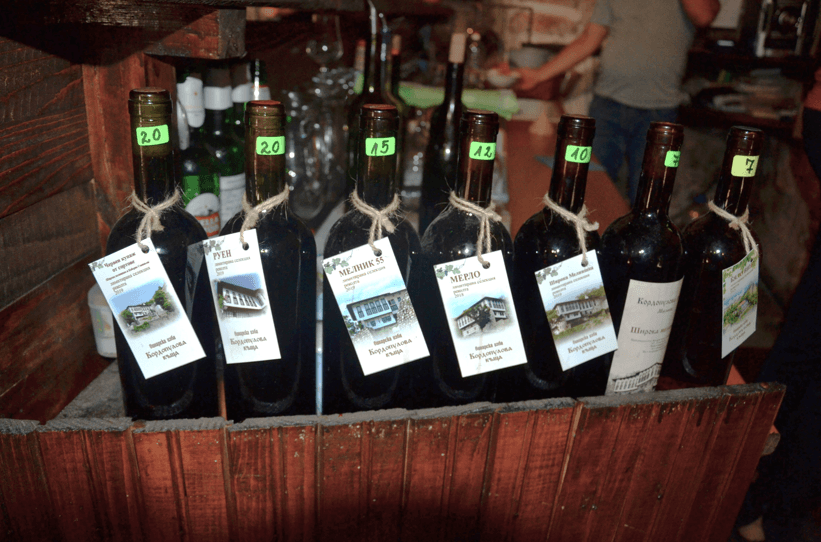
At the end of the visit, I bought a bottle of each of the above-mentioned varieties. They are now part of the shelves of my wine cellar. The photo shows the varieties with the price of each one.
It was getting late and we were thinking that a traditional dinner would be welcome. The Bulgarian tavern HOLIDAY IN MELNIK-Guest House spoiled us with special dishes, next to which the wine (Bulgarian of course) continued the wonderful story of these lands, where the thirsty traveler is welcomed with love and humanity as it should be...
Dear wine travelers, when you go to or return from wonderful Greece, do not bypass Melnik, it is worth visiting this place lost in time. A charming city, reminiscent of the towns of Provence, with picturesque houses, narrow streets and countless traditional shops.